As a linguist I’m fascinated by language change from any era, but it’s particularly interesting to watch how language evolution itself has changed with the advent of the internet. Now, where once geographic realities constrained language change to a mostly generational timeline, the introduction of the internet into society has wildly accelerated the usual process. Now, any group of language speakers with an internet connection can be in contact with any other group around the globe and exchange vocabulary, syntactic structures, or pragmatic tics.
The internet has also prompted the development of a new dialect of English. The language of the internet has moved beyond pidgin forms like ‘leet’ and ‘noob’ and has developed full-fledged syntactic rule structures and a distinct vocabulary. Linguists are avidly studying this new dialect, often called Internet Speak, which is unique in that it is not geographically confined, has developed at record speeds, and employs a different primary modality.
Internet Speak developed mainly in written form in chat rooms, forums, blogs, and social media. As such, many semantic and pragmatic tools that relied on metalinguistic cues like tone, facial expression, body language and gesture were inaccessible and required adaptations to be introduced.
Adaptation came through the creative expansion of the uses of punctuation. In other dialects of English, punctuation is already used in the written forms to indicate a few specific uses of tone; for example, most English speakers associate a question mark (?) with a raised tone at the end of an utterance, usually denoting a question (hence the name). Speakers also differentiate between the tones represented by a period (.) or an exclamation mark (!) and their associated semantic meanings. Internet Speakers took this existing function of our writing system and expanded the usage to make it more robust.
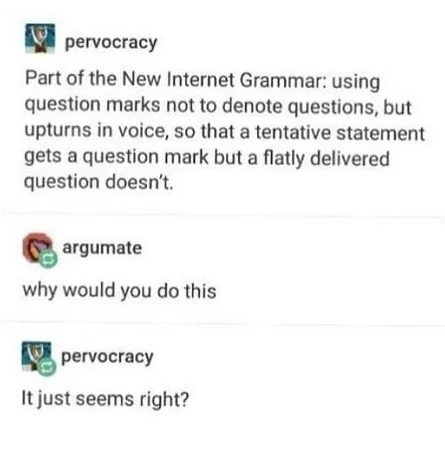
Even a small tweak like the one described in the image above – associating a question mark with an upturned tone rather than solely with questions – allows for a broader and richer conversational style. After all, questions have additional markers such as question words (why, how, where, who, what) to ensure they are comprehensible. Removing a question mark from a question to indicate a flat tone and adding a question mark to a statement to indicate an upturned tone provides opportunities to re-insert metalinguistic cues that deepen the meanings of utterances, such as indicating that a statement is tentative.
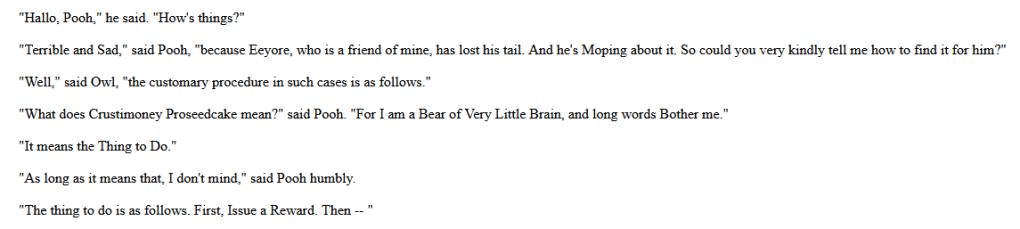
Capitalization is another important tool in the Internet Speak dialect. Writing in all caps (LIKE THIS) denotes an increased volume akin to shouting, and thus can be seen as more aggressive or more enthusiastic than writing with conventional capitalization. Speakers also employ capitalization to denote Very Important Things, and this isn’t even a new phenomenon; A.A Milne and ee cummings used the same tactic.
The most extensive new application for punctuation prompted by Internet Speak is one that many people forget had its origins in punctuation at all: emojis. Though today we have thousands of emojis covering all manner of things from facial expressions to American Sign Language hand forms to flags and activities, the original emojis were constructed of punctuation marks and letters or numbers, like these: 🙂 😡 :3 ^_^
Contrary to some naysayers’ dire warnings, emojis don’t replace words. Native Internet Speakers use them as intensifiers, like adding fireworks emojis after a “Congratulations!” to amp up the enthusiasm, or to supply an approximate facial expression with an ambiguous message to clarify the intent.
But let’s talk for a moment about gestures. One of my favorite examples at present is the “chef’s kiss,” a gesture comprised of bouncing your gathered fingertips on your lips for a kiss, often vocalized (“MUAH!”) for effect, and denoting true excellence or perfection. It often even replaces actual descriptive words, indicating that the excellence is beyond the ability of words to convey.

One might think that such a gesture would be impossible to use on the internet without the use of gifs or emojis, but native Internet Speakers once again turned to punctuation for a solution to the problem of providing gestural semantic content: the paired asterisks.
The paired asterisks (used *like so*) are a holdover from coding, where it is common to add comments to your code within a pair of asterisks so others can understand what the code is doing or what changes have been made without affecting the function of the code itself. Internet Speakers saw the value in a construction that provides contextual information, and co-opted it for gestural additions to discourse:
- Are you serious? *facepalm*
- *taps foot* any day now…
- she said she’d go to management. *rolls eyes* good luck with that
- omg this song is amazing! *chef’s kiss*
There have even been uses of *audible chef’s kiss* to imbue additional enthusiasm into the gestural tag, indicating that the kiss is vocalized (adding in the MUAH!). Myriad gestures have been redesigned in this way to accommodate the lack of ability to see the gestures. They function almost like a narrator’s voice in the discourse.
But one of the most intriguing things I have noticed about Internet Speak’s accommodations for semantic and pragmatic cues is when they spill back over into other dialects of English, particularly spoken forms. I have witnessed people drop phrases that would be marked by asterisks online into casual conversation in lieu of the gesture itself.
It’s a fascinating phenomenon. One would think that with access to physical gestures, the practice would simply revert, but from the examples I’ve seen, narrating the gesture rather than performing it seems to be a kind of in-group marker, an indication that the speaker is code shifting between a spoken English dialect and Internet Speak.
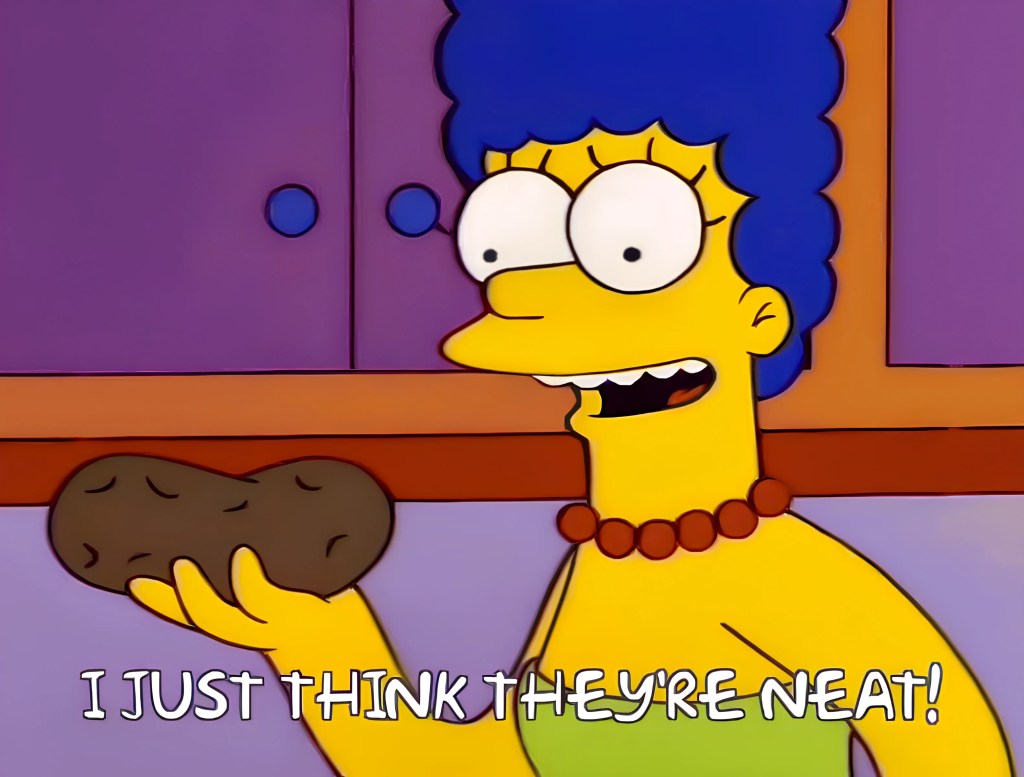
There’s definitely a lot of interesting phenomena to watch when it comes to our newest dialect of English. For a great tour, I highly recommend checking out Gretchen McCulloch’s Because Internet (in bookstores or libraries) and her blog, All Things Linguistic. (I’m not sponsored, I just think she’s neat.)
Happy wordsmithing!


Leave a Reply